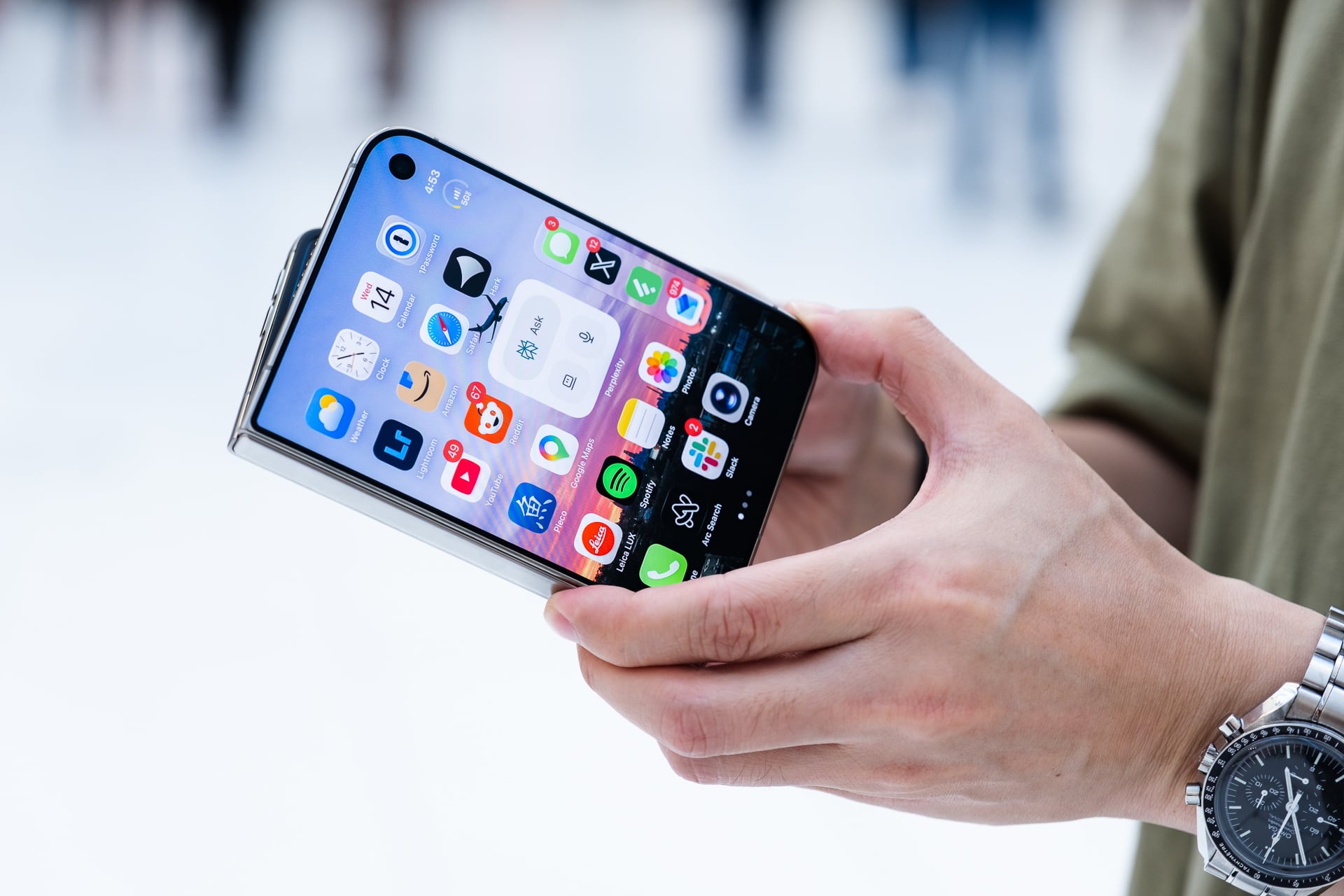
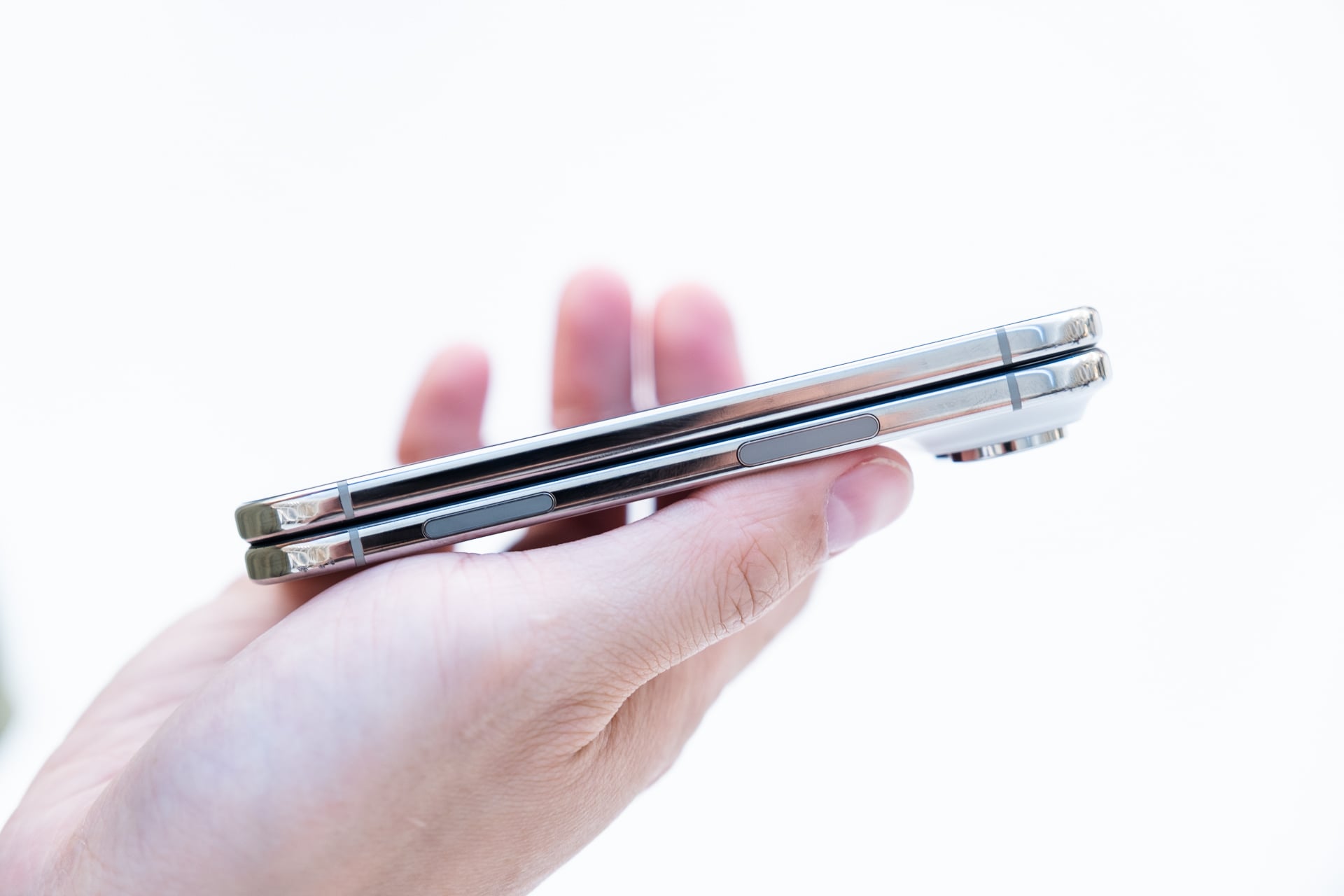
One of the biggest complaints about the iPhone Duo is that it doesn’t have Face ID, the biometric security feature that uses facial recognition to unlock the device and authenticate Apple Pay transactions. Instead, the foldable iPhone uses Touch ID, a fingerprint-based sensor built into the side button. Apple’s solution appears to be a face recognition unlock feature—not Face ID—coming in a future iOS 27 software update.
Apple has added an “Unlock with Front Camera” face unlock feature to the iPhone Duo in the second developer beta for iOS 27.3. The face unlock feature only works on the iPhone Duo’s lock screen. Users will still need to use Touch ID for Apple Pay transactions and filling out saved passwords.
The feature is called “Unlock with Front Camera” on iPhone Duo. When it detects your face, it unlocks but doesn’t open into the Home Screen. You still need to swipe up to get to your apps
This is not Face ID. It’s only for the lock screen. You still need to use Touch ID for… pic.twitter.com/1IiwafG5Kz
— Ray Wong (@raywongy) November 16, 2026
X user pdfu, who regularly surfaces features in Apple’s beta software, shared the below animation for the Dynamic Island when both the face recognition and Touch ID are set up.
New animation for the Dynamic Island on iPhone Duo when both Face Recognition and Touch ID are set up. pic.twitter.com/Uor9wZqmJZ
— pdfu (@itspdfu) November 16, 2026
The feature can be turned on within the Settings app, then going to Touch ID & Passcode, and then scrolling down to the “Unlock with Front Camera” setting.
There are some caveats to how this face recognition works—for security purposes. First, the face unlock feature only works with the camera on the outer display, not the under-display camera on the inner display. Second, the iPhone Duo needs to have been recently unlocked with Touch ID or a passcode for the face unlock feature to function. Third, you’ll need to use Touch ID again after 45 minutes of inactivity, according to MacRumors.
This face unlock feature is also not to be confused with Face ID, which uses a TrueDepth camera system comprised of an IR sensor that shines thousands of little dots onto a person’s face to authenticate them using, essentially, a 3D map. When Apple announced Face ID for the iPhone X in 2017, the company not only said Face ID was more secure compared to the 2D-based facial recognition unlock features on Android devices, but also that there was a 1 in 1,000,000 probability someone could unlock your iPhone with Face ID versus the 1 in 50,000 probability someone could unlock your iPhone with Touch ID.
Apple told Gizmodo over email that the “Unlock with Front Camera” does not have the same protections as Face ID or Touch ID. Apple also says that the camera-based unlock is about as accurate as Touch ID’s 1 in 50,000 probability, and also added that it’s one of the most secure RGB camera face unlock features.
It’s unclear how secure this new face recognition unlock is compared to Face ID, Touch ID, or Android-based facial recognition features. The added security measures are welcome, though. Gizmodo has reached out to Apple for clarification on the security of the feature and will update this story if we receive a response.
Bloomberg’s Mark Gurman said in his Sunday Power On newsletter that Apple is still working on adding proper Face ID to the iPhone Duo 2. The challenge is adding the TrueDepth camera system into the foldable iPhone’s thin design. It’s not an impossible task. On the iPhone Air, Apple manages to squeeze in a Face ID sensor by using the additional depth of the camera plateau to fit the component. Of course, the backside of the iPhone Duo’s outer display is the inner display. The only way for Apple to add Face ID to the iPhone Duo 2 would be to significantly shrink the size of the TrueDepth camera system.
At the very least, this should make it less of a hassle for iPhone Duo owners to constantly put their finger on the Touch ID sensor to unlock the device.
This article has been updated with information shared by Apple about how the “Unlock with Front Camera” feature compares with Touch ID’s security.